Published: 21 October 2026
How to Choose a Yacht Surveyor in Turkey: 10 Questions to Ask
There is no official licence for yacht surveyors in Turkey. So the choice is made not on a name but on four things; training, independence, instruments and the report. Ten questions to ask.
Serkan Kotel · Yacht surveyor · IIMS · ABYC · MCA — the person who answers the phone, walks the boat and signs the report is the same person.
Related service: Pre-Purchase Yacht Survey →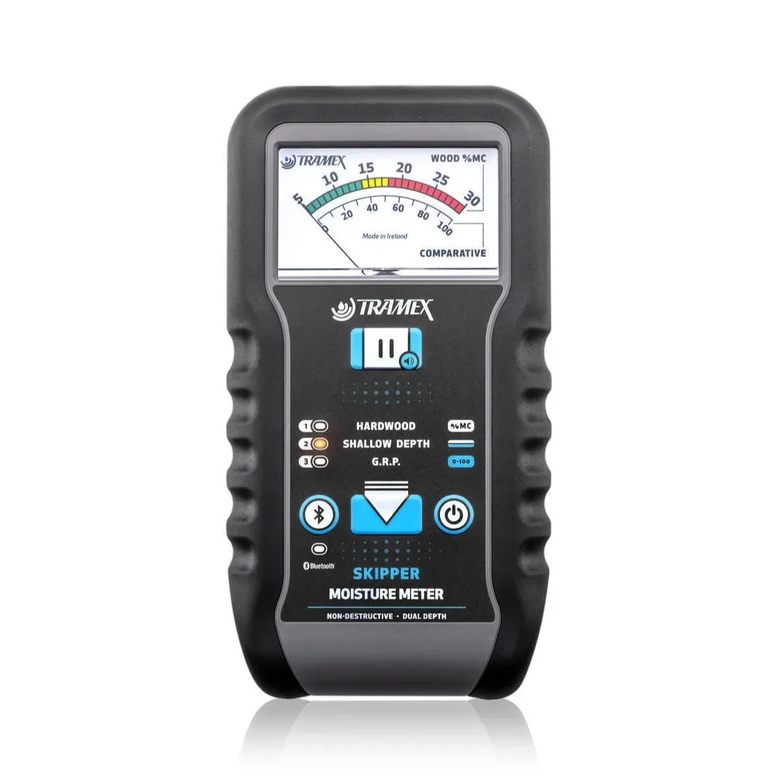
One of the most common questions when buying a boat is this: “Whom can I trust?” Turkey has no official surveyor licence for private yachts; anyone who wishes can print “yacht surveyor” on a business card. So the choice has to be made not on a name but on four things: training, independence, instruments and the report. Below I have turned those four into ten questions to ask. I have written the answers too, so you can measure the person in front of you.
Independence first: who is he working for?
Everyone in a boat sale has an interest. The broker earns commission on the sale, the seller wants the highest price, the yard wants the repair work. The surveyor must be the one person in that chain who takes no side; his income is the report itself and nothing else.
1. Ask yourself: “Who recommended this surveyor to me?” If the broker suggested him, the broker has closed sales on that surveyor’s reports before. That is not bad faith in itself; but it leaves the independence question open. Find the surveyor yourself.
2. “Will you earn anything from the sale or the repairs?” The right answer is one word: no. If the surveyor does not run a yard, does not sell parts and takes no commission, the report’s only customer is the measurement.
Training: what stands behind the title?
Because there is no licence, training is something the surveyor chose to take, and that is exactly why it means something.
3. “Where did you train as a surveyor?” The internationally recognised bodies are known: IIMS (International Institute of Marine Surveying) for yacht and small craft surveying, MTA (Maritime Training Academy) for small craft systems surveying, ABYC (American Boat & Yacht Council) marine standards certification. For tonnage surveys and flag work, ask separately about competence within the MCA framework. If the answer stops at “I have been at sea for years”, there is experience, but the method may have no standard.
4. “Which standards do you write the report against?” Findings must rest on a standard: ABYC sections, Turkish regulation (such as the Regulation on the Equipment of Private Craft, Özel Teknelerin Donatımı Yönetmeliği). “Exhaust hose with a single clamp” is an observation; “ABYC P-1 1.7.1.10 requires two clamps at each end” is a finding. The second one works in negotiation and with the insurer.
Instruments: by eye, or by measurement?
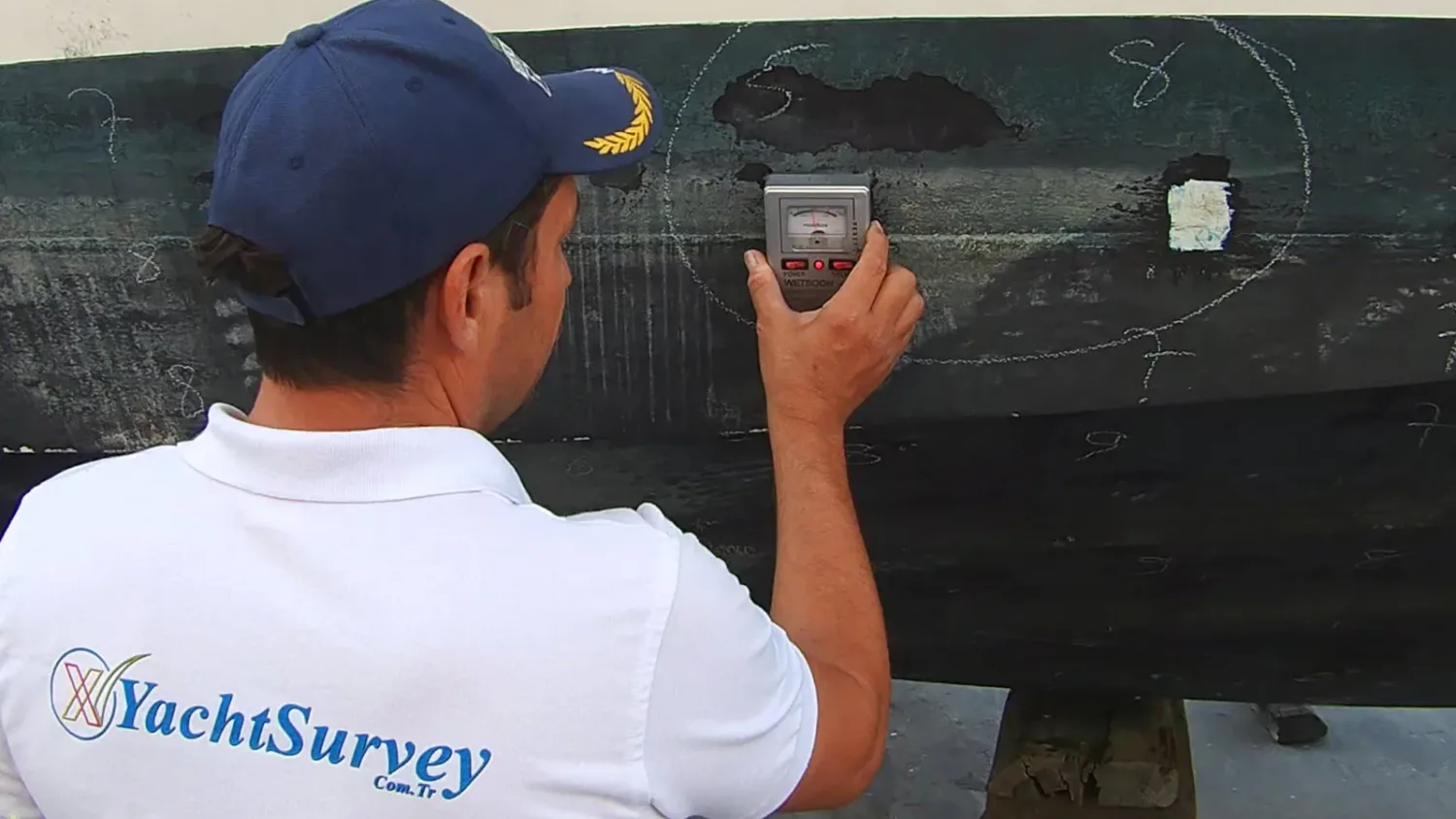
A boat’s most expensive defects cannot be seen: moisture inside the laminate, the connection heating up behind the panel, the fault records the engine has erased.
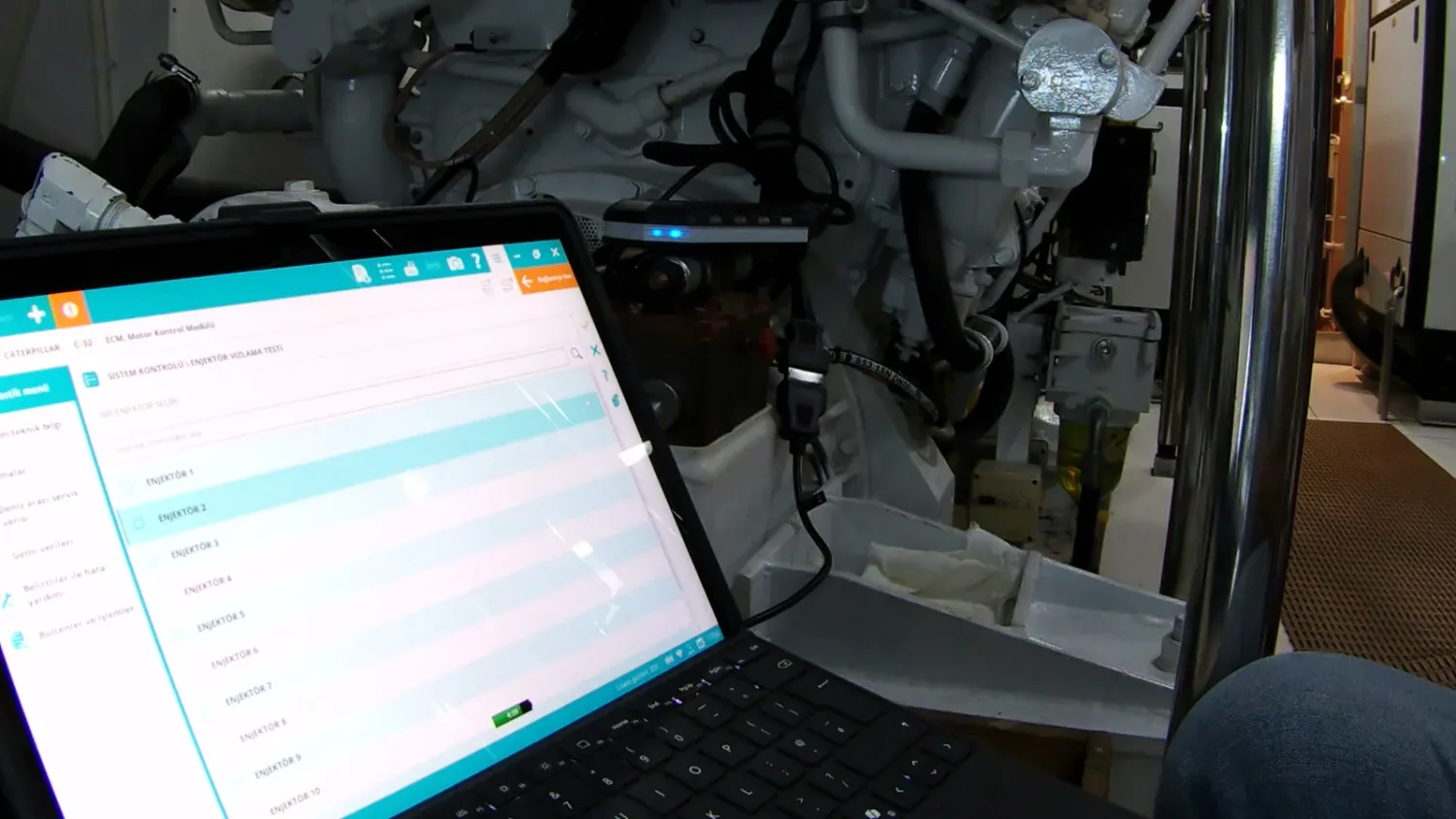
5. “Which instruments do you bring on site?” The minimum list: a moisture meter (such as the Tramex Skipper), a sounding hammer, an ultrasonic thickness gauge, a thermal camera, a borescope, a battery tester and an engine ECU diagnostic tool. The diagnostic tool matters most: the fault history the engine has recorded itself and the true running hours are data nobody can paper over.
6. “Do you haul the boat out?” A survey done without seeing the underwater hull is half a survey. Skin fittings, the shaft line, anodes, the rudder bearing and the underwater laminate can only be measured ashore or by diving. Do not tie a purchase decision to an offer that says “I’ll look at her in the water, that’s enough”.
The report: what will you be holding?
The product of a survey is the report. In negotiation, with the insurer and one day perhaps in court, it is the only thing left in your hands.
7. “Can you show me a sample report?” Stay away from a surveyor who will not show a sample with the boat’s name hidden. In the sample, look for: a photograph and a measured value with every finding, a priority order for the findings (immediately / within the season / monitor), the supporting standard and a repair cost range. On a 40 ft boat the report runs past 40 pages; a 15-page report says half the boat was not looked at.
8. “When will I have the report?” The right answer is the day the fieldwork ends. If the report takes weeks, either it is not being written or no notes were taken on site.
9. “Do you do a sea trial?” A survey is not complete until the engine has been seen under load. Vibration, temperatures, rudder play and the autopilot test are read on the sea trial.
Time and fee
10. “How long does it take, and what does it cost?” On a boat of around 40 ft the fieldwork is 1.5 working days; the fee is calculated by boat length, 26 €/ft for a pre-purchase survey. Offers that finish in half a day at a “fixed price” get cheaper by cutting scope; a cheap survey pays for itself several times over with the single finding it missed.
In short
You can measure a surveyor with ten questions; but four of them decide. Does he earn nothing from the sale, does he have international training, does he come on site with instruments, does he show a sample report. If you get “yes” to all four, you have found whom to trust.
If you want my own answers: training and accreditation here, how the survey is done here, fee calculation here.
Knowledge base
Questions related to this topic
- Whose side is the surveyor on — is the report impartial?
- Who pays the broker’s commission and how is it set?
- How long does a yacht survey take?
- How should a sale listing be prepared to attract buyers?
- How do brokers use Category B and C findings in price negotiation?
- What share of a 9-10 m sailing yacht’s value goes on annual berthing, maintenance and insurance?