Skip to content
YachtSurveycom.tr

SAMPLE REPORT · PRE-PURCHASE SURVEY

Pre-purchase survey report sample

2018 Jeanneau Prestige 500 · Flybridge motor yacht · 14.92 m · 2 × Volvo Penta IPS 600. A real survey carried out ashore and afloat in September 2026; the vessel name, identification numbers and personal details were changed by the report program's sample mode, and everything else is as recorded.

Seven findings from other surveys were added to show the range of defects (delamination, cracks beneath the bow thruster, an oily bilge and others). Each is marked in the report with a note saying "this finding does not relate to this vessel"; the remaining 88 findings come from this vessel's own survey.

Pages
149
Chapters
16
Findings
95
Photos
230

Findings by priority: 12 A · 47 B · 36 C

Every page carries a "SAMPLE REPORT" watermark; the document is for information only and cannot be relied upon as a survey opinion.

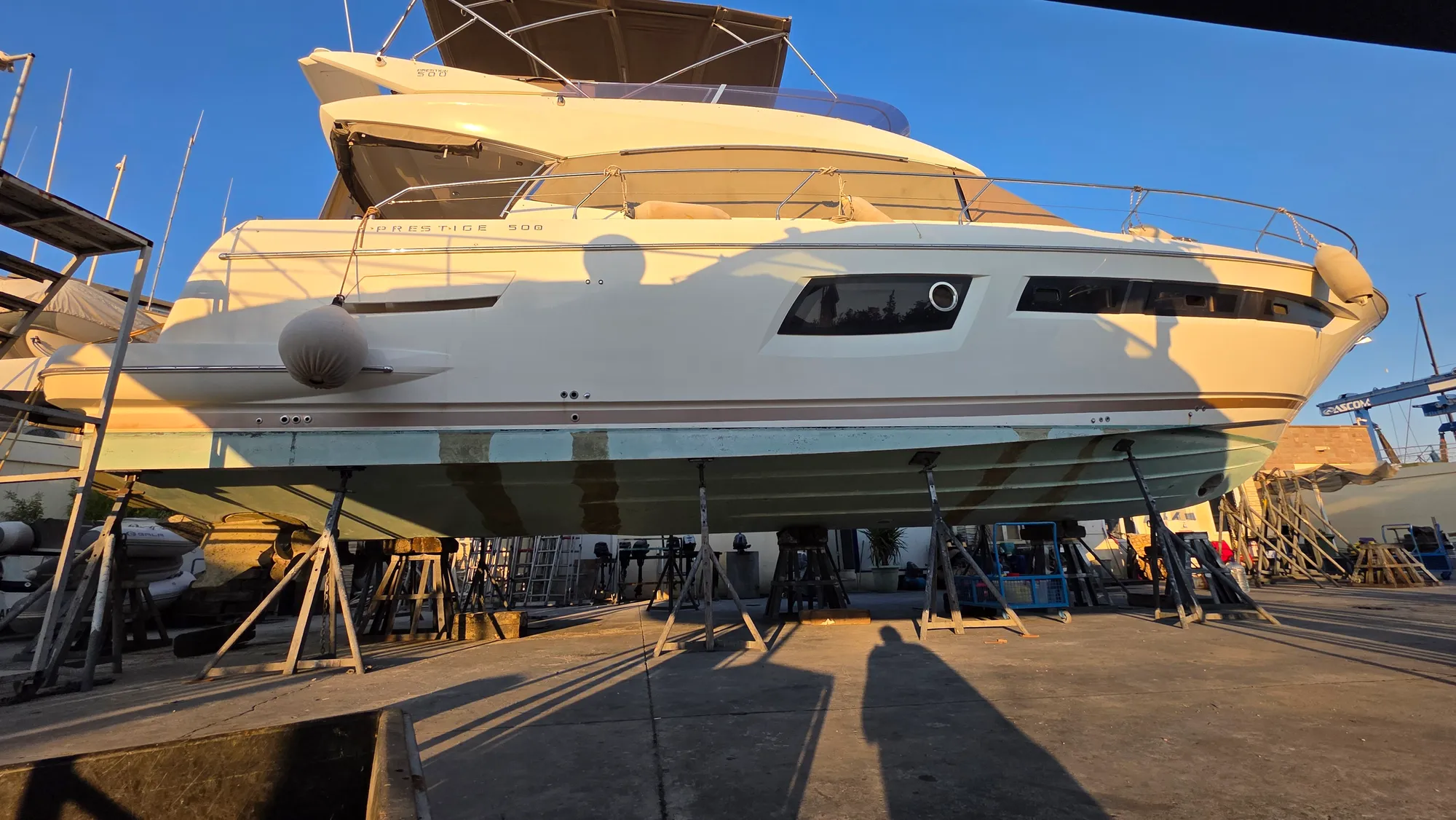
The sample report's vessel: a 2018 Jeanneau Prestige 500 hauled out on chocks at the yard on the day of the survey
Cover photograph · ashore, washed and dried — moisture readings only mean something in this state

REPORT STRUCTURE

16 chapters, one numbering

The report is written in a chapter › topic › item order and every item has a number (for example 15.1.12 Osmosis Comments). Findings are printed in a box immediately below the item they concern and are collected in A/B/C order at the end of the report. Items left blank, or not present on this vessel, are not printed.

  1. 01

    Introduction

    Purpose and scope, survey standards, definition of terms, the A/B/C system, surveyor's notes

  2. 02

    General Information

    Vessel and survey particulars, survey location and attendees, vessel information, valuation summary

  3. 03

    Safety Equipment

    Life-saving and fire-fighting equipment, navigation lights, CE marking, mandatory placards and publications, detectors, bilge pumps

  4. 04

    Hull and Structure

    Hull layout and material, bulkheads, bilge, moisture comments; deck, superstructure, bridge and flybridge

  5. 05

    Exterior Equipment

    Exterior fittings, ground tackle, tender

  6. 06

    Interior Accommodation and Furnishings

    Interior, galley, interior systems (air conditioning, laundry), audio-visual

  7. 07

    Propulsion and Machinery Space

    Engine identification and hours, exhaust, cooling, mounts; IPS drives; engine room equipment

  8. 08

    Sea Trial

    Conditions, loads, first start, vibration, astern, full-throttle RPM and speed, sound measurements

  9. 09

    Steering Systems

    IPS steering, helm stations, rudder angle indicator, bow thruster

  10. 10

    Fuel Systems

    Tank material and capacity, filling, venting, bonding, lines, shut-off valves

  11. 11

    Electrical Systems

    DC system and battery health table, chargers, bonding; AC shore connection and panel

  12. 12

    Generators, Inverters and Other Auxiliary Power Sources

    Generator particulars, hours, cooling, exhaust; inverter; solar power

  13. 13

    Water Systems

    Fresh water tanks and analysis, hot water, watermaker, black water, grey water

  14. 14

    Electronics and Navigation Equipment

    Multifunction displays, VHF, compass, radar, GPS, autopilot, camera, antennas

  15. 15

    Underwater Equipment and Hull Inspection

    Propellers, pod drives, platform, trim tabs, seacocks, transducers, anodes, antifouling, osmosis scan

  16. 16

    Summary

    Condition rating, survey summary; then the Findings and Recommendations list in A/B/C order

FINDING CARDS FROM THE REPORT

Six real findings, as written in the report

Each finding is written with its observation, its basis (Turkish legislation or an ABYC clause) and its recommendation; the photographic evidence sits inside the box. The cards below were selected from the report's 95 findings.

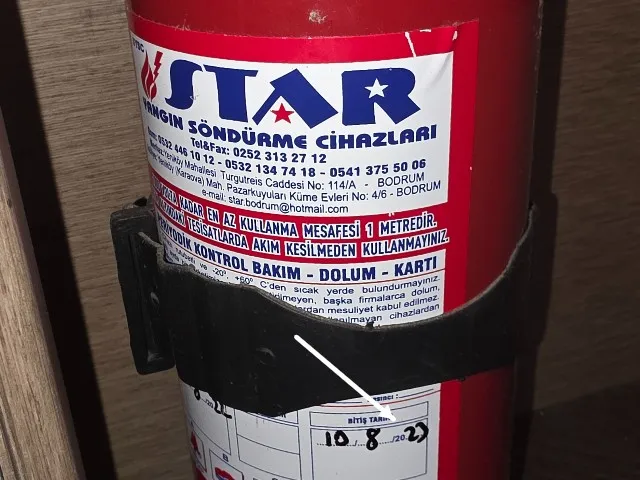
Periodic inspection label on a fire extinguisher, inspection date 2023
Extinguisher label, close-up
Finding A-2First priority — safety

Fire Extinguishers

3.1 Safety Equipment

The portable fire extinguishers on board were found to have expired on 10.08.2023.

Basis: Turkish Regulation on the Equipment of Private Vessels (unofficial translation), Annex 2.A.5 and 2.B.5 — extinguishers per engine and per cabin, plus a 6 kg extinguisher on vessels over 10 metres with enclosed spaces; the vessel is not permitted to sail while they are missing.

Recommendation: It is recommended that all fire-fighting equipment be recharged and certified.
Open on page 13 of the report

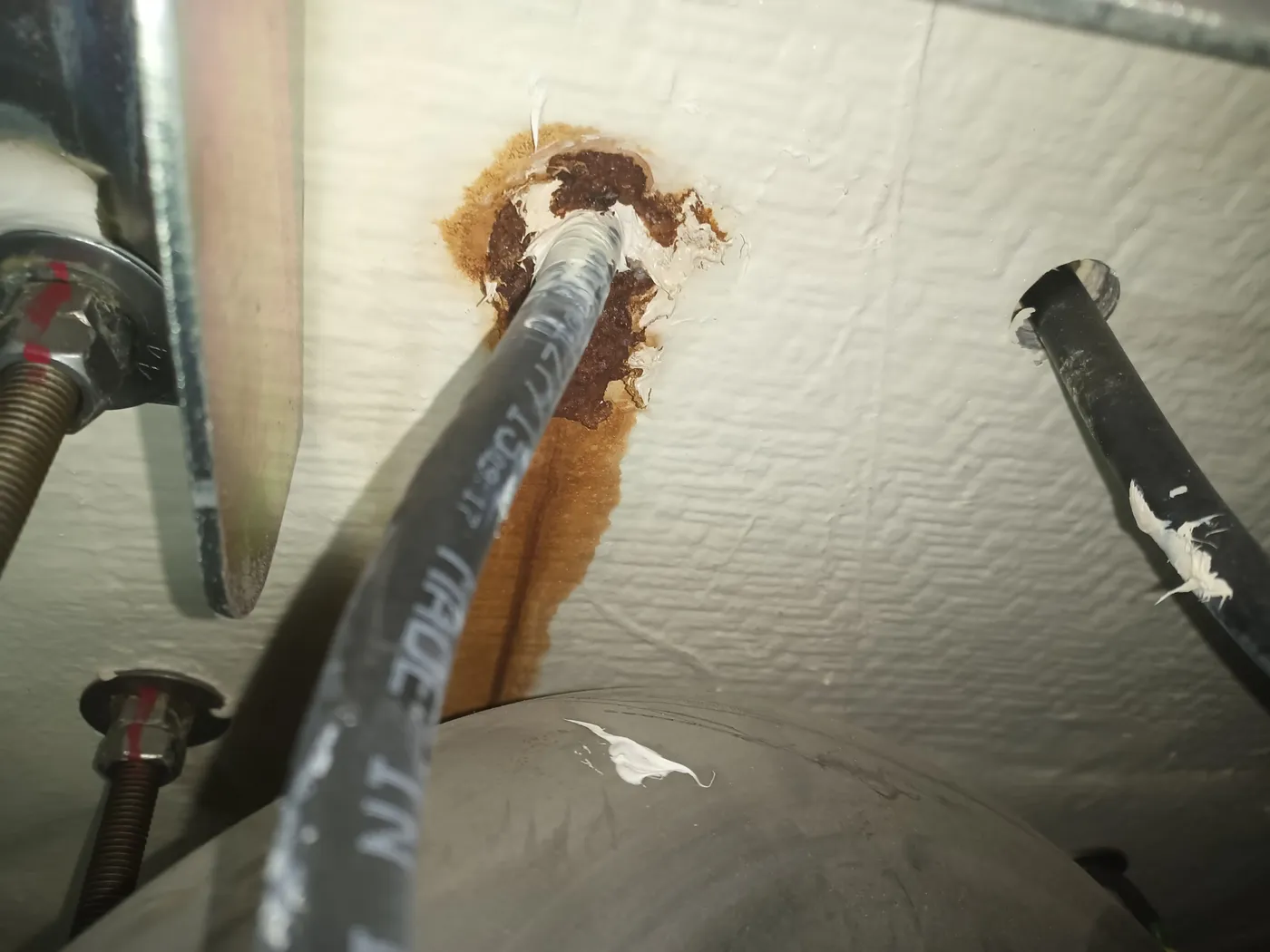
Rust staining and sealant marks at the hull penetration of the trim tab hydraulic hose
Hose penetration, close-up
Finding A-8First priority — safety

Trim Tab System

15.1 Underwater Equipment and Hull Inspection

Water is leaking into the vessel at the starboard trim tab hydraulic hose penetration.

Basis: Active water ingress through a penetration below the waterline — first priority under the surveyor's criteria (risk of the vessel taking on water).

Recommendation: It is recommended that it be repaired.

Open on page 98 of the report

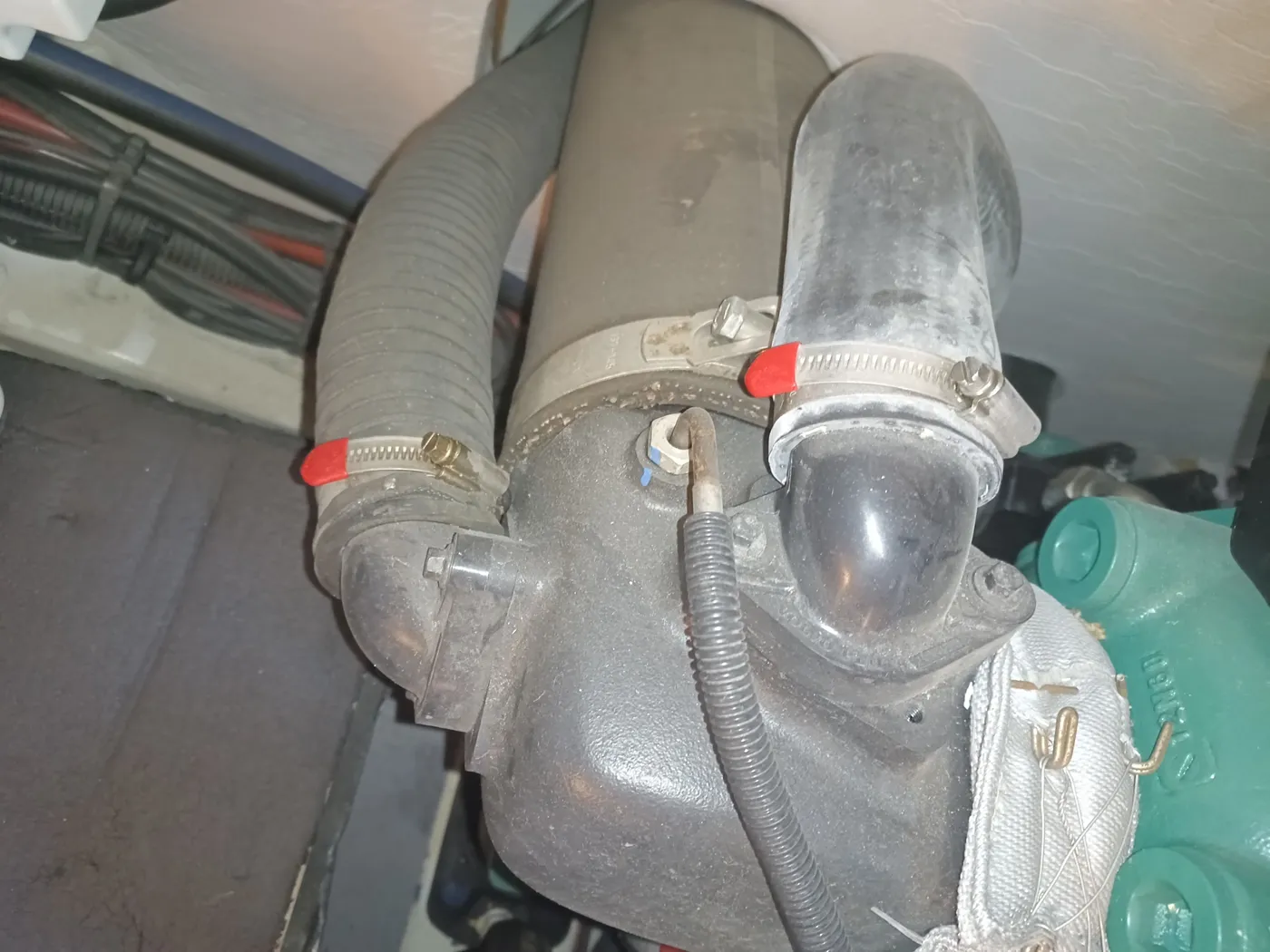
Exhaust hose connection in the engine room with a single clamp
Exhaust hose connection
Finding B-13Second priority — to be rectified in good time

Engine Exhaust System

7.1 Propulsion Engines

Only a single clamp was found at an exhaust hose connection.

Basis: ABYC P-1 (July 2019) 1.7.1.10 — each exhaust hose connection shall be secured at each end with at least two non-overlapping clamps made entirely of stainless steel.

Recommendation: It is recommended that double clamps be fitted.

Open on page 55 of the report

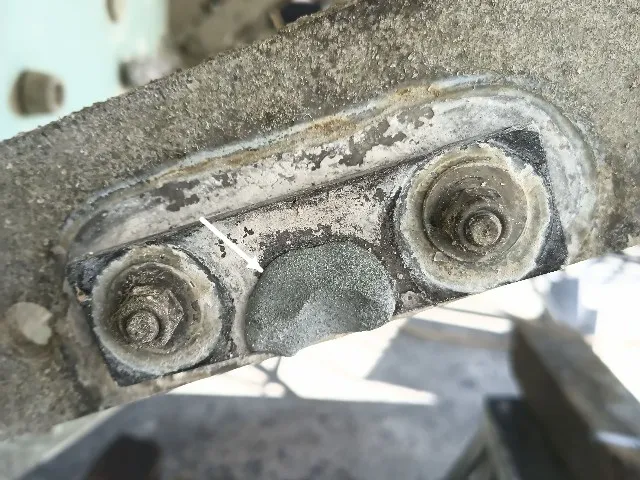
Anode bracket on the hull; advanced wastage between the bolts
Anode bracket
Finding B-44Second priority — to be rectified in good time

Sacrificial Anodes

15.1 Underwater Equipment and Hull Inspection

Some anodes were found to have wasted far more than normal.

Basis: Good seamanship practice: an anode is replaced at 50% depletion; otherwise the metal it protects is left open to galvanic corrosion.

Recommendation: The anodes must be replaced once they reach 50% depletion; otherwise, this may cause the base metal they protect to corrode in the water.

Open on page 103 of the report

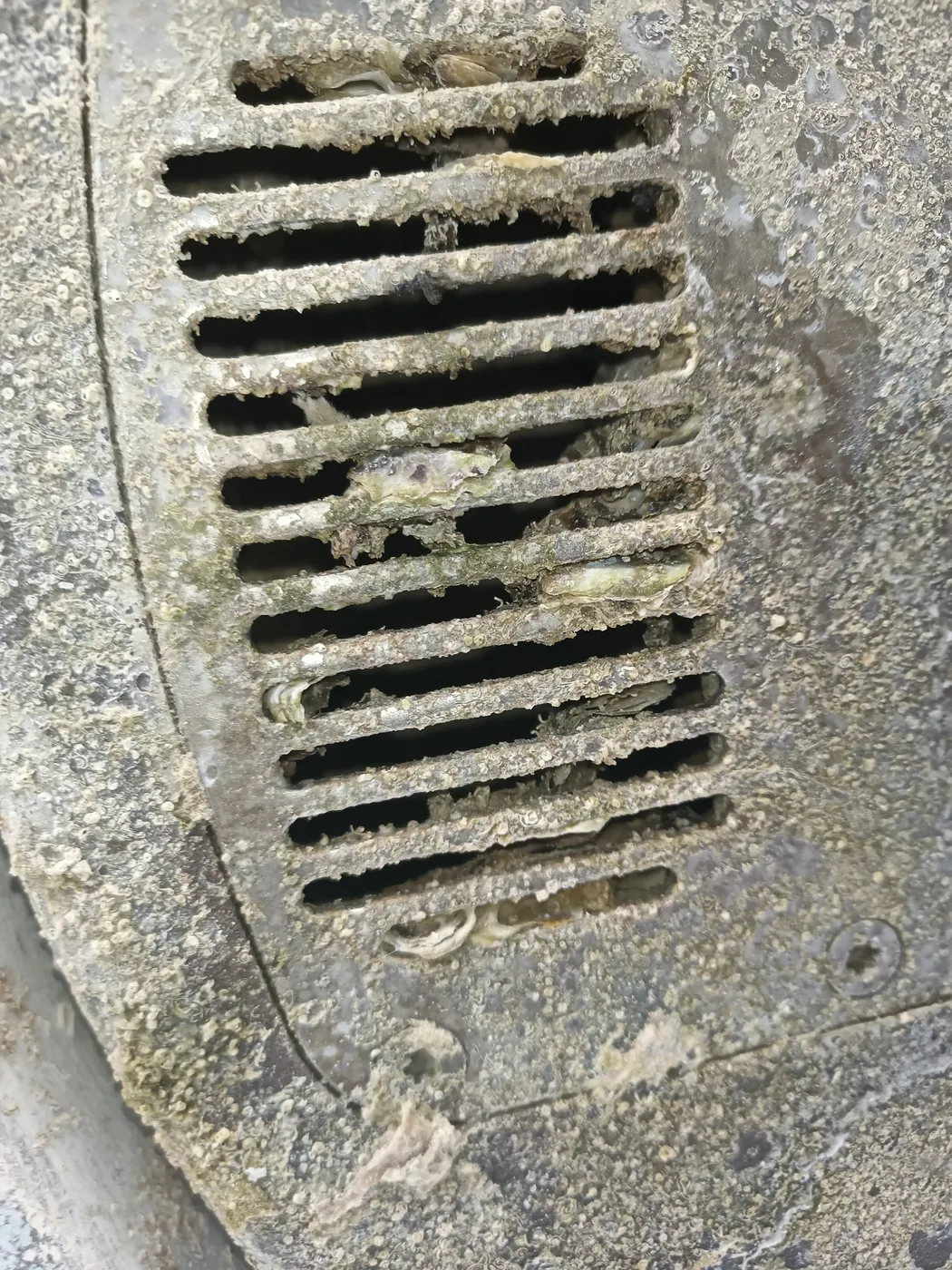
Underwater intake strainer blocked by marine growth
Intake strainer
Finding B-39Second priority — to be rectified in good time

Below-Waterline Seacocks and Skin Fittings

15.1 Underwater Equipment and Hull Inspection

It was found that the seacocks and skin fittings had not been sufficiently cleaned.

Recommendation: It is recommended that the seacocks and skin fittings be cleaned. (Fouling causes overheating in the engine circuit and blockage in other circuits.)

Open on page 99 of the report

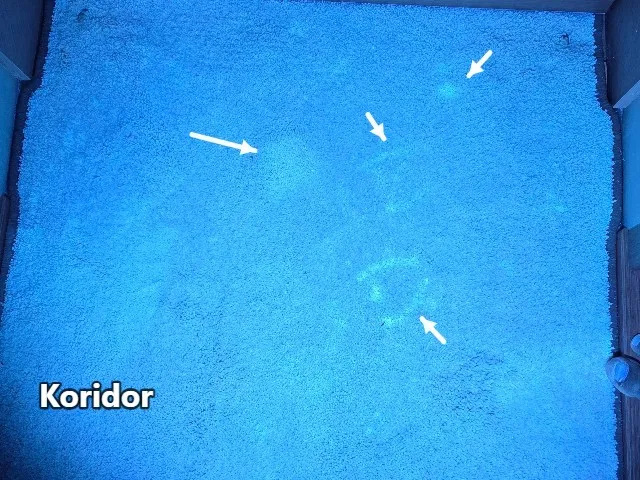
Fluorescing stains on the corridor carpet under UV light, marked with arrows
Under UV light
Finding C-19General finding — maintenance and cosmetic

Saloon and Cabin Flooring

6.1 Interior

Deformed areas and stains were found in the carpet on the saloon and cabin floors. The photographs were taken under UV light; the areas that fluoresce indicate organic stain/liquid residue.

Recommendation: It is recommended that this be cleaned/repaired in accordance with good marine practice.

Open on page 43 of the report

MEASURED TABLES

Measured, not stated

Battery state of health (SOH) is measured for every battery; instead of "the batteries are good" the report gives the figures. For this vessel the result was finding B-22: three of the service batteries and the tender battery are below the 50% threshold.

The same principle applies to water: a sample from the fresh water tank is measured for TDS, salinity, ORP and temperature, and each value is interpreted.

Battery state of health (SOH) — 11.1 DC Electrical Systems
Battery bankQtyHealth (SOH)Result
Start4100% · 100% · 100% · 100%Satisfactory
Service — port340% · 48% · 100%Two below threshold
Service — starboard327% · 100% · 70%One below threshold
Bow thruster4100% · 100% · 100% · 97%Satisfactory
Generator1100%Satisfactory
Tender146%Below threshold
Fresh water analysis — 13.1 Fresh Water System
MeasurementValueInterpretation
TDS (total dissolved solids)273 ppmBelow the drinking water limit (500 ppm)
Salinity0.02%No seawater contamination
ORP171 mVNo disinfectant residual; to be monitored
Temperature33.0–33.4 °CFavourable to bacterial growth; tank hygiene recommended

POSITIVE POINTS

A report is not only a list of defects

Observations that preserve the vessel's value, or count in the buyer's favour, are written too. They are given under "Overall Vessel Assessment" in the General Information chapter, to be read together with the findings.

  • Low engine hours: 393 / 393; the diagnostic reading and the gauge reading are consistent
  • Both engines ran smoothly under load; no abnormal vibration, unusual noise or temperature rise (the measured RPM shortfall is reported separately)
  • Underwater hull scanned with a moisture meter, phenolic hammer and thermal camera: no osmotic blistering or widespread moisture
  • No structural adverse findings in the deck, superstructure or bulkheads; the hull-to-deck joint is watertight and sound
  • Seakeeper gyroscopic stabiliser fitted in 2024 (as reported by the captain); operated, and it markedly reduces roll
  • Watermaker operated and producing water; the fresh water analysis is within drinking water standards
  • Solar power added subsequently; the generator and starter batteries are at 100% health
  • Washing machine never used (as reported by the captain); air conditioning, refrigerator, oven, hob, dishwasher and microwave operated and serviceable

HOW TO READ THE REPORT

What to take from the report in five minutes

  1. 01

    Cover and particulars

    Who it is for, which vessel, on what date. A real report carries the verification QR code and the 3D tour access code here.

  2. 02

    Scope and limitations

    Chapter 1: what was inspected and what could not be. Areas that cannot be seen without dismantling, and systems that were not tested, are listed here.

  3. 03

    The A findings first

    The A list: what must be rectified before the next voyage. On this vessel: delamination at the starboard bow shoulder, cracks beneath the bow thruster, an exhaust gas leak, no lifejackets, expired extinguishers, no CO or smoke detector, water ingress at the trim tab hose.

  4. 04

    Then B: the negotiation list

    Items to be rectified in good time; those with a repair cost are the basis of the price discussion: anodes, antifouling, generator cooling, batteries.

  5. 05

    Photograph numbers

    Every photograph is numbered in report order; use the numbers to move from the text to the photograph and from the photograph to the item.

  6. 06

    Summary and condition rating

    Chapter 16: the surveyor's overall opinion and rating. The summary does not replace the report; read the whole of it before deciding.

Frequently asked questions

About this sample

What do the letters A, B and C mean in the report?

A: first priority — life safety, fire, water ingress or a deficiency that legislation treats as "not permitted to sail"; to be rectified before the next voyage. B: second priority — loss of a system function, an active leak or a below-waterline sealing defect that should be rectified in good time. C: maintenance, cosmetic and good-seamanship notes. This sample has 12 A, 47 B and 36 C findings.

How are the findings used in a negotiation?

The "Findings and Recommendations" list at the end of the report gives every finding a number (A-2, B-39 and so on). The buyer uses these numbers to ask the seller for repairs or a price adjustment; on request the surveyor adds a cost range per item. In this sample the main items for a price discussion are the sacrificial anodes, the antifouling, the generator cooling circuit and the service batteries.

Why are there so many photographs?

Every observation is documented with a photograph, so that the reader can judge for themselves what the surveyor saw. Photographs are numbered in report order, printed inside the finding box, and can be referred to in the text as "see Photo 180". Those taken under UV light or with a thermal camera are marked as such.

Is a real report different from this sample?

The content is the same; only the identity details were changed. A real report shows the vessel name, HIN, client and file number on the cover, together with a verification QR code (yachtsurvey.com.tr/en/verify) proving the report has not been altered, and the access code for the 3D tour. In the sample these were removed and the tour is given as an open link.

Is the English report the same survey as the Turkish one?

Yes. It is the English edition of the same survey, with the same findings and the same numbering. Each passage was translated, checked against a back-translation into Turkish and approved before the PDF was printed. The English edition has its own file number (ORNEK-01-EN) and verification record.

Contact

Book your survey

Tell us where the vessel lies and your approximate date — we reply the same day.

Serkan Kotel — yacht surveyor, portrait

Serkan Kotel

Yacht surveyor · IIMS · ABYC · MCA — the person who answers the phone, walks the boat and signs the report is the same person.

Service areas

Bodrum · Yalıkavak · Turgutreis · Milas · Göcek · Fethiye · Marmaris · Datça · İstanbul · Ayvalık · Antalya

Message on WhatsApp