Skip to content
YachtSurveycom.tr

SAMPLE REPORT · OUT-OF-WATER HULL SURVEY

Out-of-water hull survey report sample

2018 Jeanneau Prestige 500, 14.92 m, IPS pod drives. The vessel ashore, washed and dried; the underwater hull and its fittings scanned with a moisture meter, a phenolic hammer and a thermal camera. Produced from a separate inspection carried out with the vessel ashore, within the scope of an out-of-water hull survey only; identity details were changed.

Pages
33
Chapters
6
Findings
9
Photos
45

Findings by priority: 0 A · 3 B · 6 C

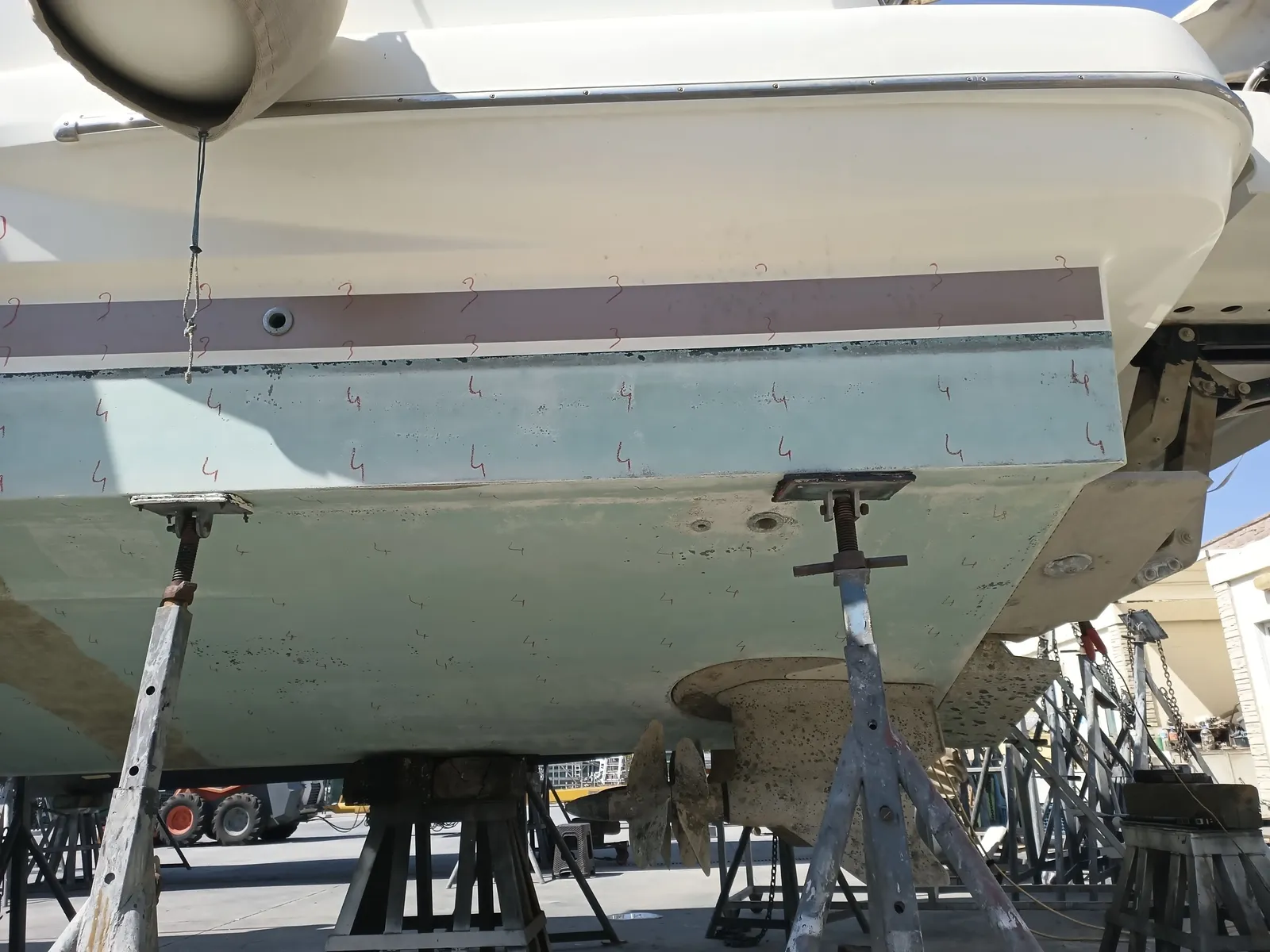
Underwater hull of the hauled-out motor yacht on chocks, with the antifouling and waterline visible
Underwater hull overview, percussion sounding stations marked

METHOD

How the underwater hull is inspected

The report does not say "the underwater hull is fine"; it says what was looked at and how. The sequence used in this sample is below; the result of each step is under the relevant item, with its photographs.

  1. 01

    Haul-out and drying time

    After washing, the underwater hull is left to dry; on a wet hull a moisture meter gives misleadingly high readings.

  2. 02

    Moisture scan (Tramex Skipper 5)

    The hull is divided into a grid; suspect areas are confirmed with a second instrument. On this vessel no reading was above the threshold.

  3. 03

    Phenolic (percussion) hammer

    Systematic tapping looks for voids and delamination in the laminate; stations are numbered on the hull.

  4. 04

    Thermal camera

    Damp laminate and filled areas show up as temperature differences; repair marks are also looked for under infrared light at night.

  5. 05

    Underwater equipment

    Propellers and pods, seacocks, transducers, anodes, earth plate, trim tabs and platform hydraulic penetrations are checked one by one.

  6. 06

    Antifouling and osmosis assessment

    Paint condition, worn-through areas and blisters are graded by extent and depth.

HULL DOCUMENTATION

From the report's hull photographs

6 of 45 photographs

Hull photographs are taken along the waterline, under the stern and at every skin fitting; percussion sounding stations are written on the hull. At the next haul-out the same points are measured again.

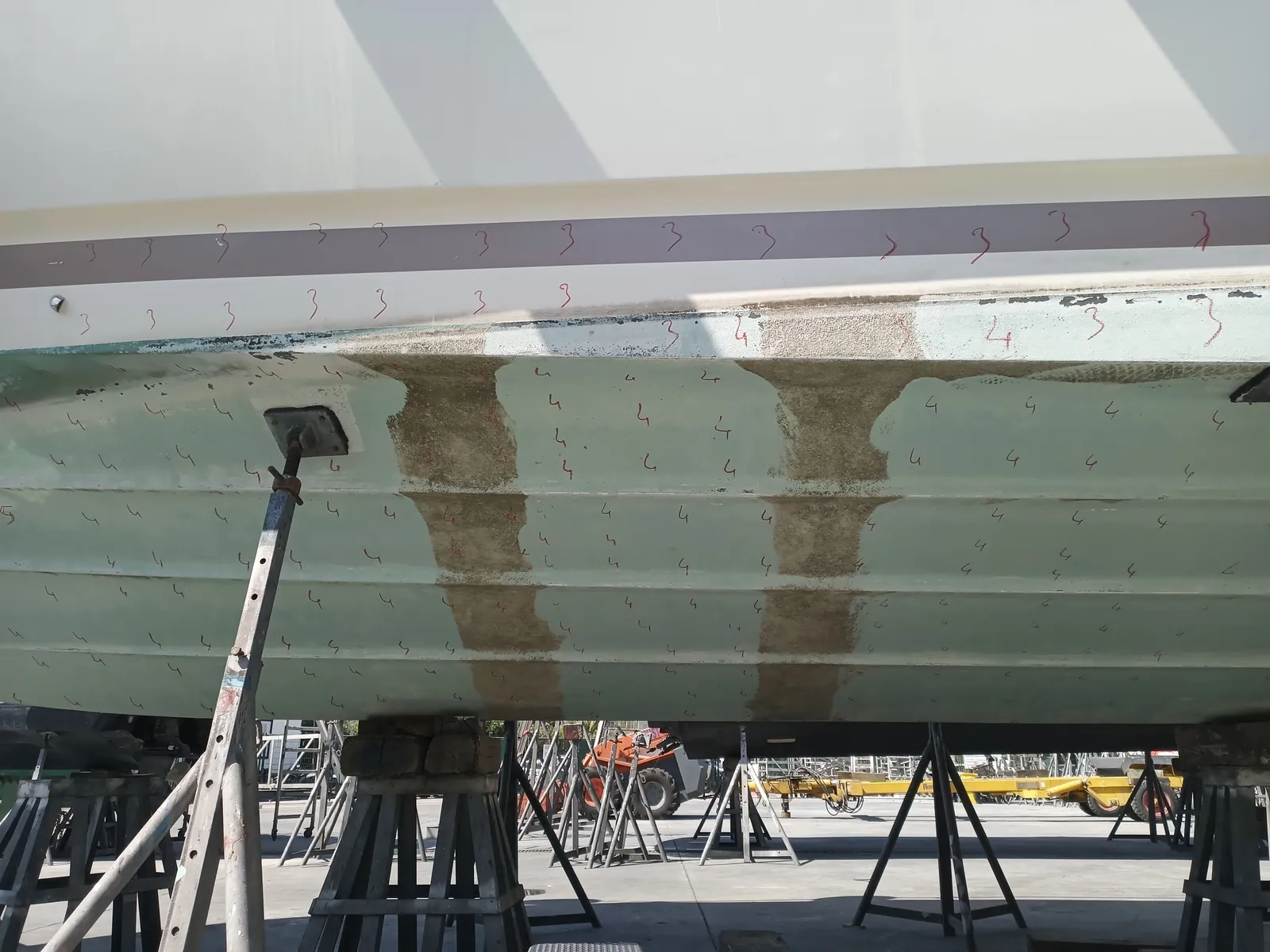
  • Port waterline — stations numbered in red during percussion sounding and the moisture scan
    waterline, numbered stations
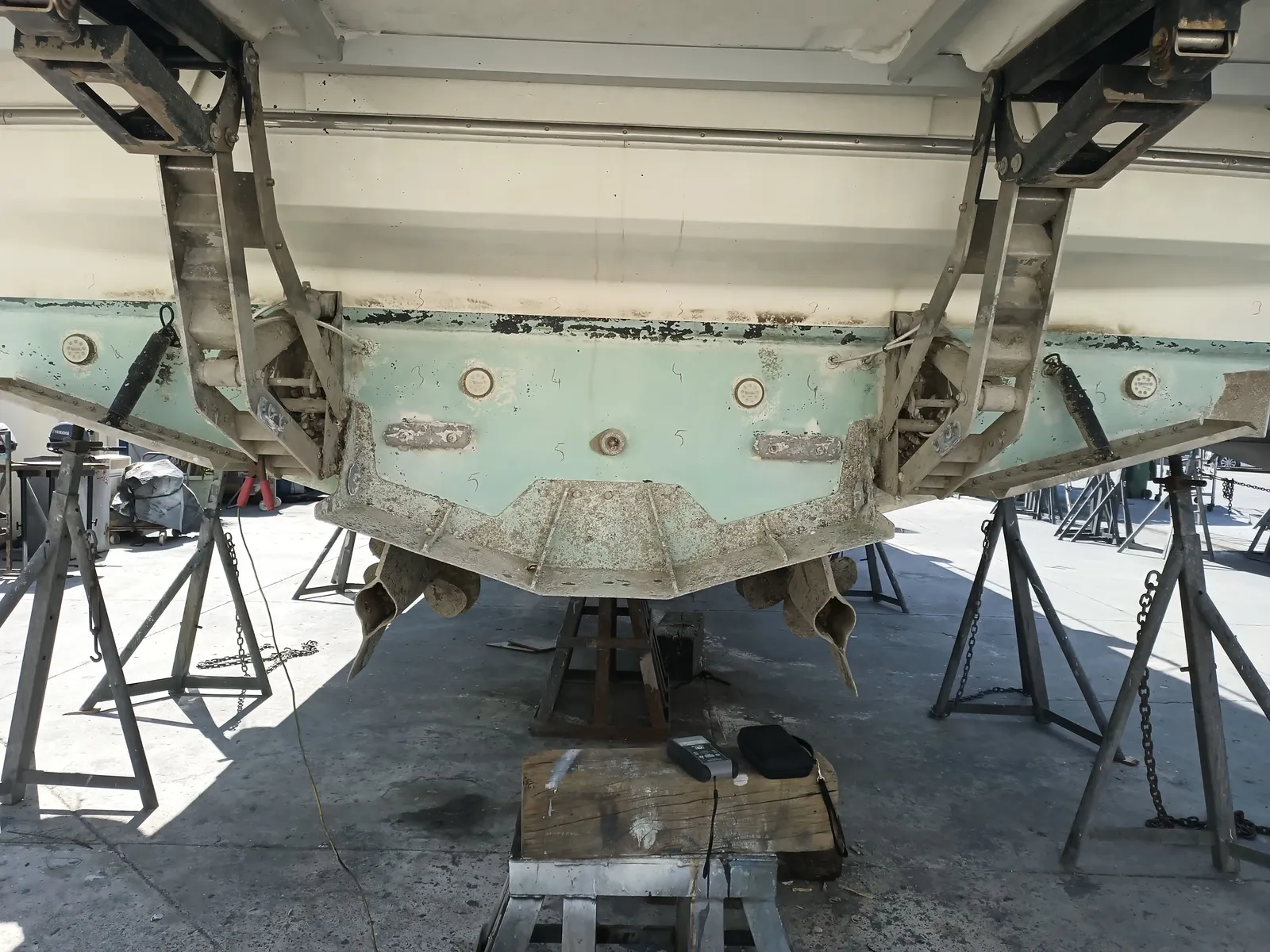
  • Under the stern — IPS pods and propellers, condition of the antifouling
    under the stern, pods
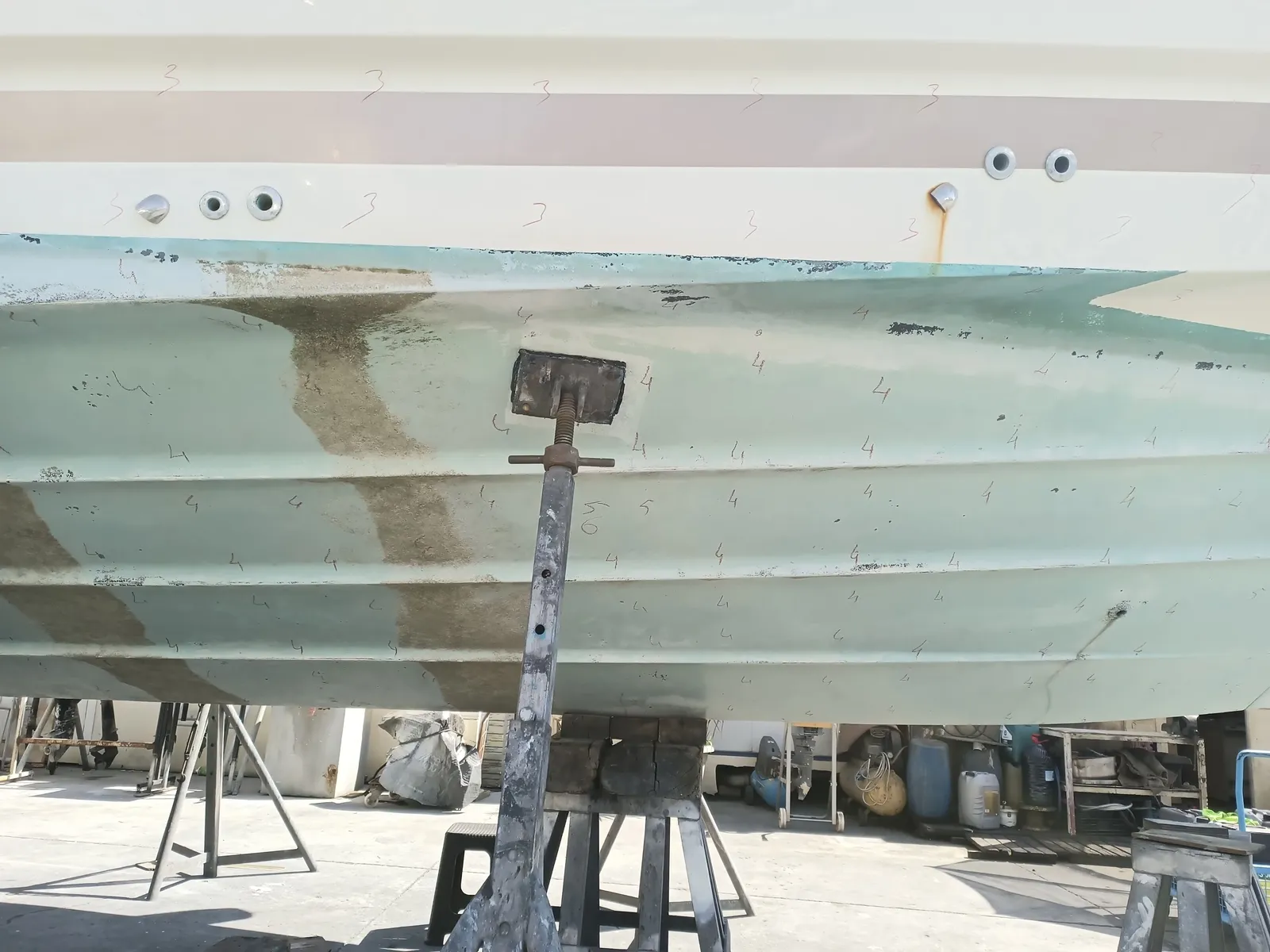
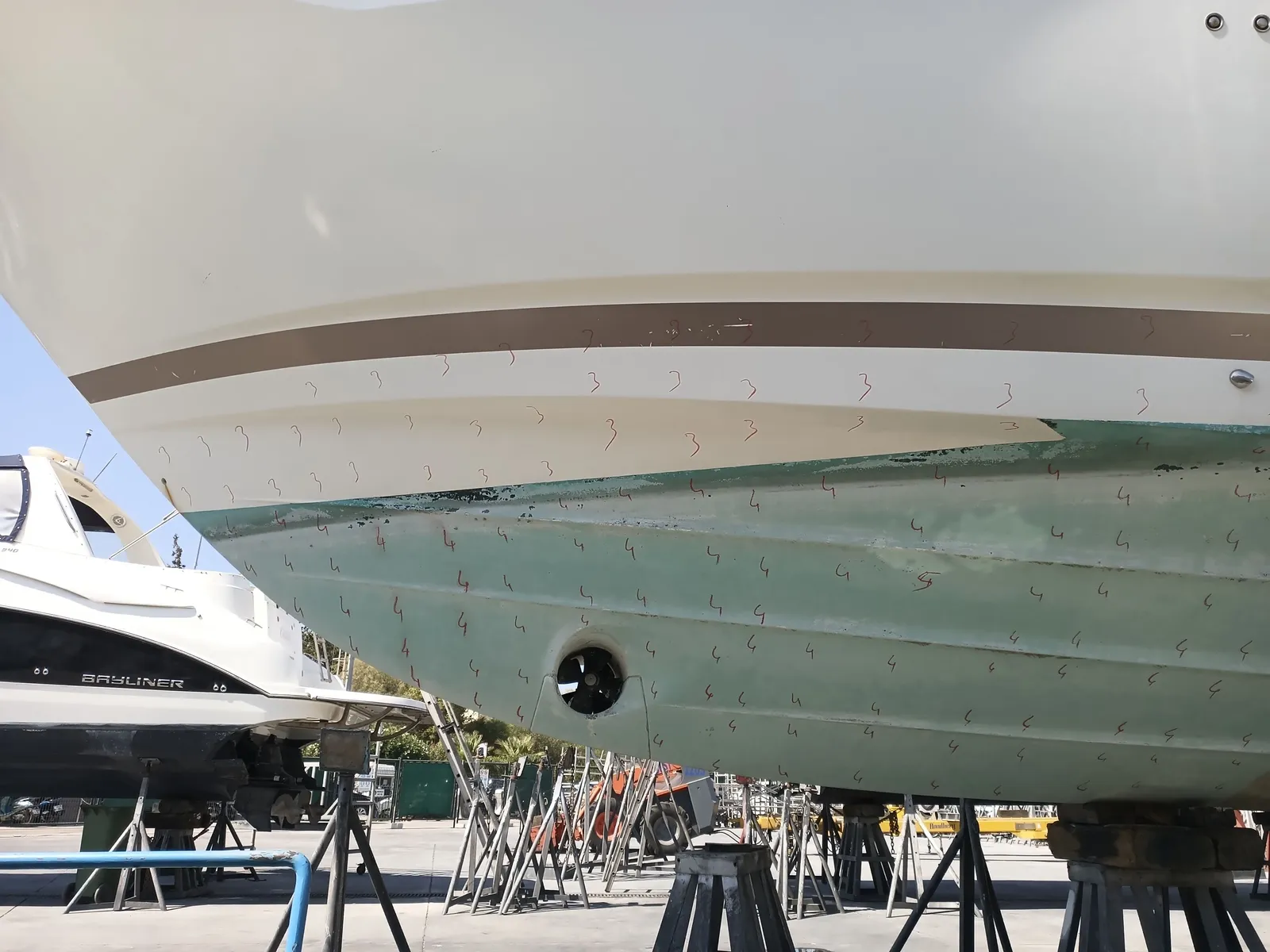
  • Stem and waterline — the underwater hull dried and ready for moisture readings
    bow, waterline
  • Aft underwater hull — seacock and outlet grilles, propellers
    aft underwater hull, grilles
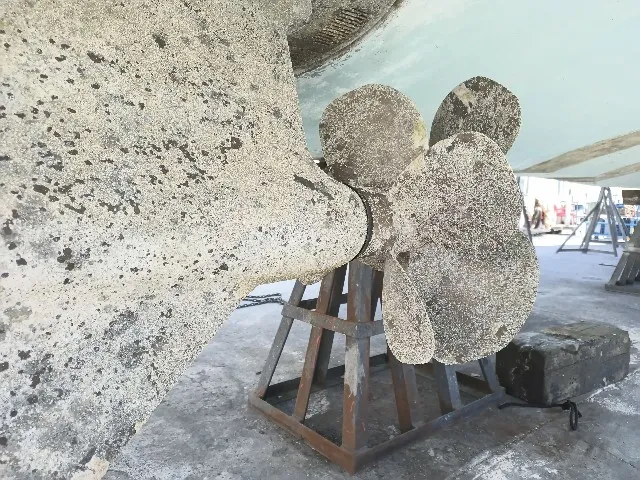
  • Propeller and pod — weed and marine growth on an uncleaned surface
    propeller, fouling
  • Below-waterline skin fittings — numbered check points
    skin fittings

FINDING CARDS FROM THE REPORT

Six findings from below the waterline

Selected from the hull report's 9 findings. Finding numbers follow this report's own order; the same findings carry different numbers in the full survey report.

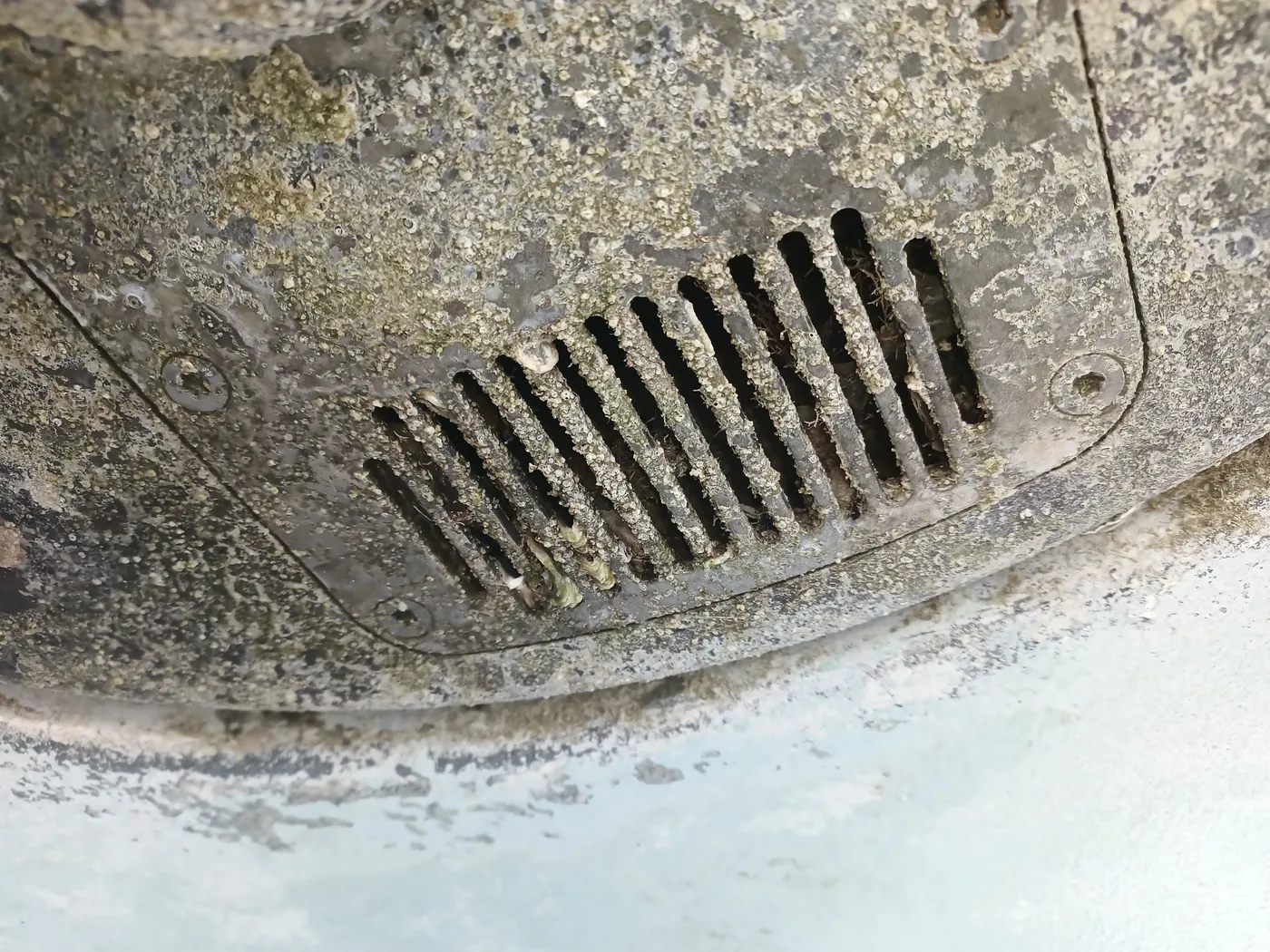
Underwater intake strainer covered with mussels and marine growth
Intake strainer
Finding B-1Second priority — to be rectified in good time

Below-Waterline Seacocks and Skin Fittings

5.1 Underwater Equipment and Hull Inspection

The seacock inlets, skin fittings and hull earth plate below the waterline were found to be covered with marine growth and a layer of weed. No other adverse condition was found in the seacock bodies or penetrations.

Recommendation: It is recommended that the seacock inlets, skin fittings and earth plate be cleaned of marine growth before the vessel is relaunched, and that the seacocks be checked by operating them open and closed after cleaning.
Open on page 16 of the report

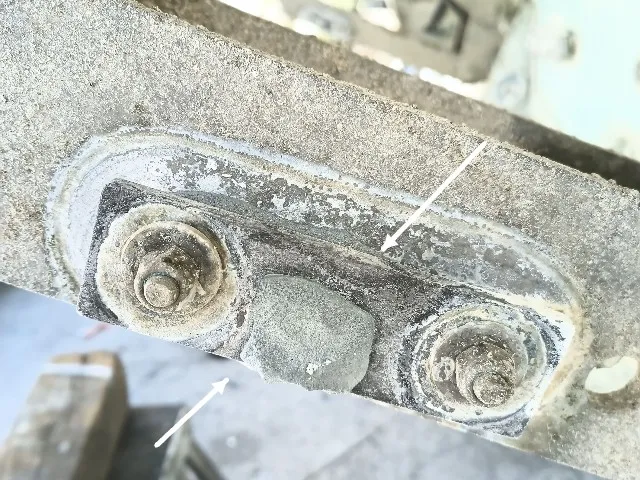
Bolted bracket recessed in the hull; the anode is heavily wasted, with rust marks
Anode bracket
Finding B-2Second priority — to be rectified in good time

Sacrificial Anodes

5.1 Underwater Equipment and Hull Inspection

Wastage of the sacrificial anodes overall was found to be approximately 80%; the generally accepted 50% depletion threshold in the industry has been exceeded. Wastage is similar and even across all anodes and does not indicate accelerated consumption caused by stray current.

Basis: Good seamanship practice: renewal at 50% depletion; otherwise the protected metal is left open to galvanic corrosion.

Recommendation: It is recommended that the sacrificial anodes be renewed before the vessel is relaunched, and that the new anodes be fitted only after the mounting surfaces have been cleaned back to bright metal.

Open on page 18 of the report

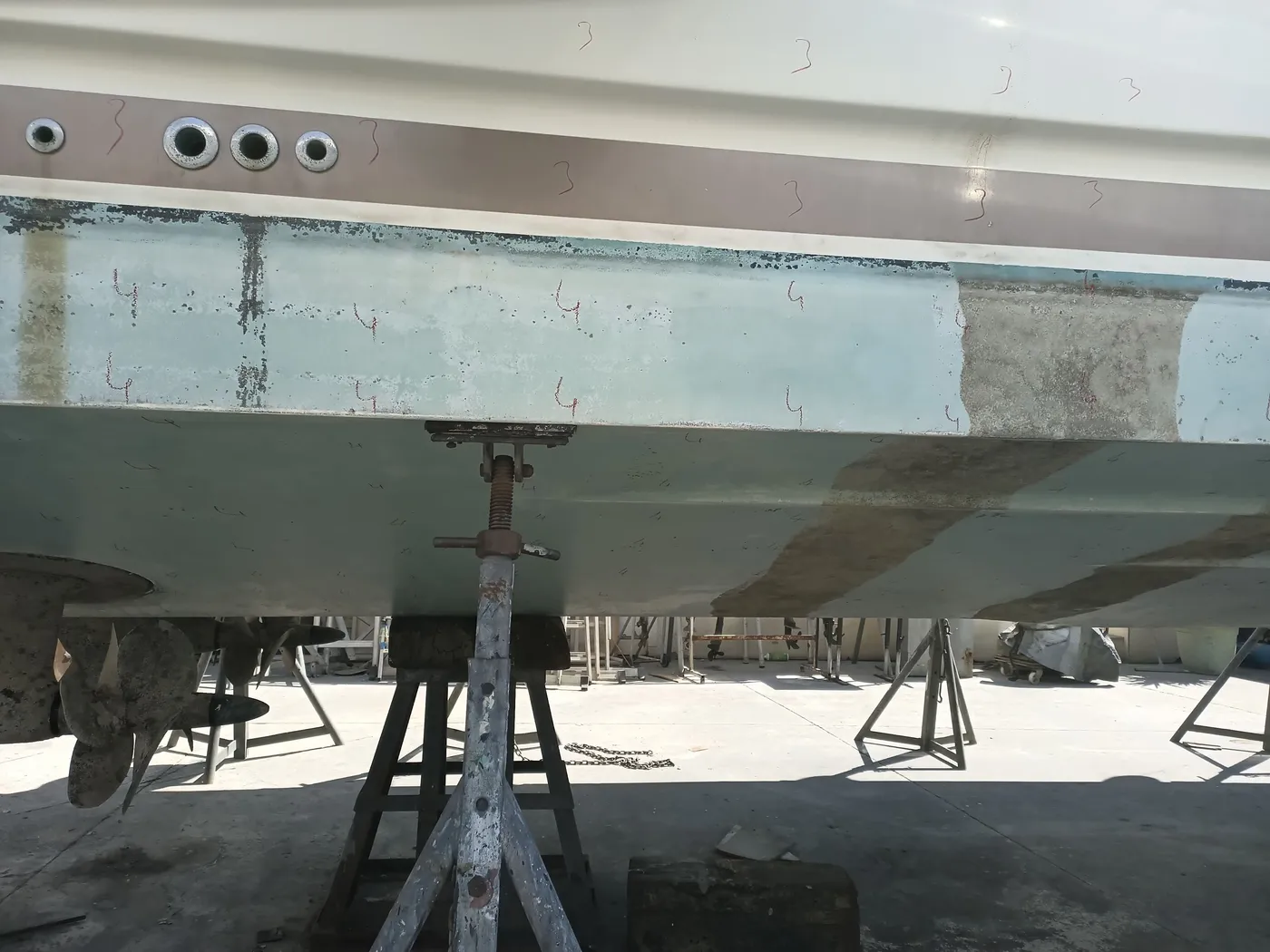
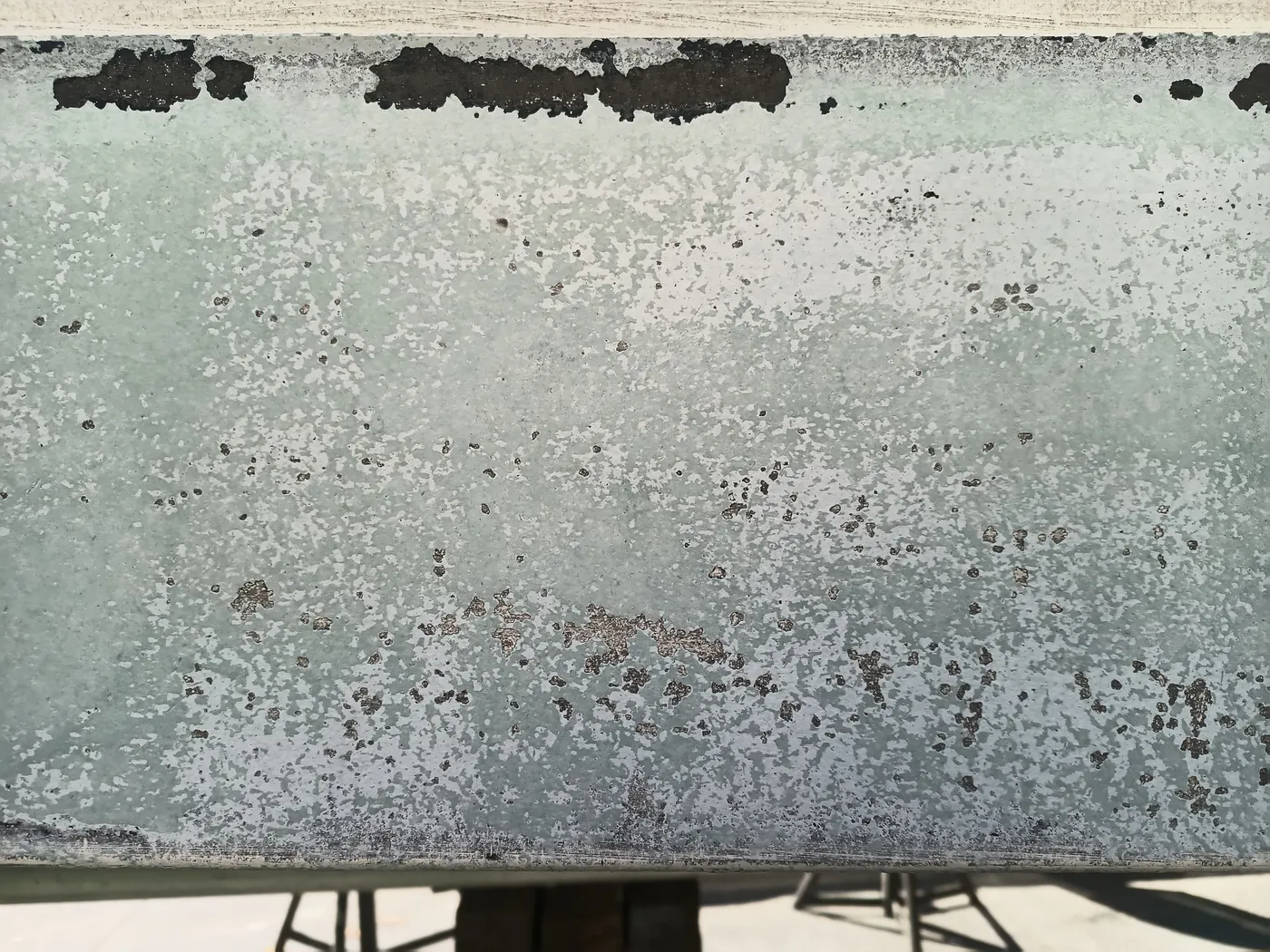
Flaking antifouling and worn-through areas on the underwater hull
Underwater hull surface
Finding B-3Second priority — to be rectified in good time

Antifouling Paint

5.1 Underwater Equipment and Hull Inspection

The antifouling paint has reached the end of its service life. In some areas the paint layer has worn through to the gelcoat, while in other areas thickened old layers are flaking off.

Recommendation: It is recommended that the flaking layers be removed by sanding, that the exposed areas be primed with a suitable barrier primer, and that new antifouling be applied over the entire underwater hull. This work must be completed with the vessel ashore.

Open on page 19 of the report

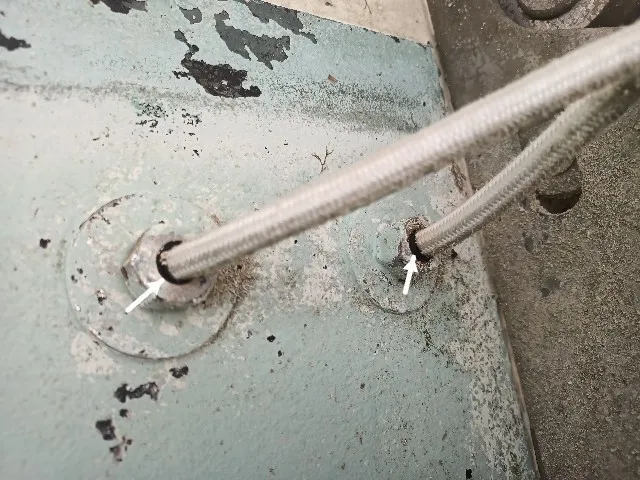
Platform hydraulic hose penetrations, marked with arrows
Hose penetrations
Finding C-2General finding — maintenance and cosmetic

Hydraulic Bathing Platform

5.1 Underwater Equipment and Hull Inspection

The outer sheathing protecting the bathing platform's hydraulic hoses from seawater was found to be deformed. No leakage, cracking or swelling was observed in the hoses themselves.

Recommendation: It is recommended that the protective sheathing be renewed and that the hoses be reviewed at the next service.

Open on page 14 of the report

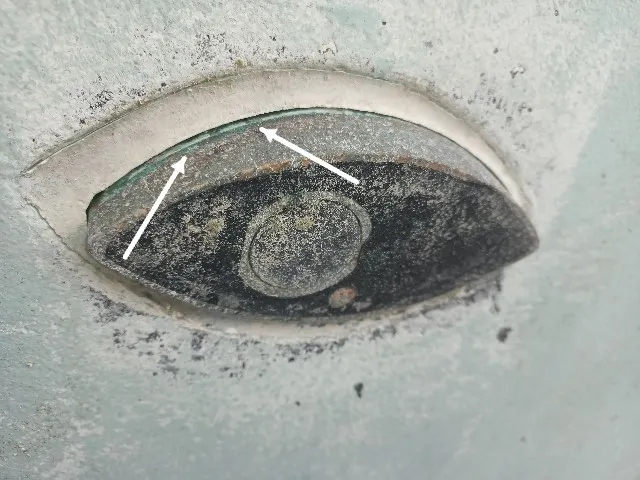
Hull-mounted transducer with cracked sealant around it
Around the transducer
Finding C-4General finding — maintenance and cosmetic

Hull Transducers

5.1 Underwater Equipment and Hull Inspection

The polyurethane sealant around the transducer housings was found to have lost its flexibility and to have begun cracking at the edges. No sign of leakage was found at the hull penetrations.

Recommendation: It is recommended that the old sealant be removed and renewed with marine-grade polyurethane sealant, and that this work be completed before the vessel is relaunched.

Open on page 17 of the report

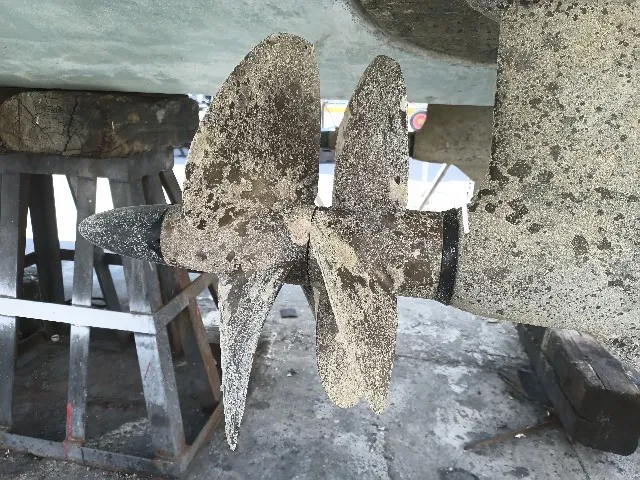
Propeller blades and pod housing; marine growth and weed on the unwashed surface
Uncleaned pod housing
Finding C-6General finding — maintenance and cosmetic

Hull Inspection Comments

5.1 Underwater Equipment and Hull Inspection

As the areas under the slings (lifting straps), the IPS pod housings and the propeller blades were not adequately cleaned during washing, surface inspection and moisture meter readings could not be fully carried out in these areas.

Basis: A limitation of the survey is also written as a finding: an area that could not be inspected is not assumed to be sound.

Recommendation: It is recommended that the surface inspection and moisture meter readings be repeated after these areas have been cleaned, and that, while the vessel remains on the same hard-standing, the slings be shifted so that the areas previously obscured by them can also be inspected.

Open on page 24 of the report

REPORT STRUCTURE

6 chapters, 33 pages

The hull report uses the same framework as the full survey; only the hull and underwater chapters are printed. A later haul-out of the same vessel can therefore be compared with this report item by item.

  1. 01

    Introduction

    Purpose and scope, survey standards, definition of terms, the A/B/C system, surveyor's notes

  2. 02

    General Information

    Vessel and survey particulars, haul-out location and attendees, vessel information (material, length, draught, tonnage)

  3. 03

    Hull and Structure

    Hull layout and material, exterior surface, bulkheads, keel, frames, bilge, bathing ladder

  4. 04

    Propulsion and Machinery Space

    Pod units, drive connections, and engine hours verified with a diagnostic tool

  5. 05

    Underwater Equipment and Hull Inspection

    Propellers, IPS drives, platform, trim tabs, drains, seacocks, transducers, earth plate, anodes, antifouling, osmosis and moisture scan

  6. 06

    Summary

    Condition rating and hull summary; then the Findings and Recommendations in A/B/C order

Frequently asked questions

About this sample

Where is the moisture map?

On this vessel the underwater hull was scanned on a grid with a Tramex Skipper 5; no station gave a reading above the threshold, so the report records "no finding" and documents it with photographs. On vessels where elevated readings are found, a station table and a colour-coded map are added to the report; values are never invented, only measured ones are written.

Can an out-of-water hull survey be commissioned on its own?

Yes. Once the vessel has been hauled out, washed and dried, it takes 4-6 hours and covers the moisture scan, percussion sounding, seacocks, anodes, shaft or pod checks and an assessment of the antifouling. The same chapter is part of a pre-purchase survey.

Should a vessel with 80% anode wastage not be bought?

No — anodes are consumables and are renewed. What matters is whether galvanic corrosion has started on the metal they protect (pods, propellers, seacocks). In this sample no finding indicated corrosion of the underwater metal fittings; the anodes and seacock cleaning were written up as items for the price discussion.

What does the antifouling finding cost?

Priming the areas worn through to the gelcoat (Gelshield) and repainting the whole underwater hull of a 15 m motor yacht varies by yard; the valuation sample uses a range of €4,000-6,000 for this work. The exact figure comes from a yard quotation.

Contact

Book your survey

Tell us where the vessel lies and your approximate date — we reply the same day.

Serkan Kotel — yacht surveyor, portrait

Serkan Kotel

Yacht surveyor · IIMS · ABYC · MCA — the person who answers the phone, walks the boat and signs the report is the same person.

Service areas

Bodrum · Yalıkavak · Turgutreis · Milas · Göcek · Fethiye · Marmaris · Datça · İstanbul · Ayvalık · Antalya

Message on WhatsApp